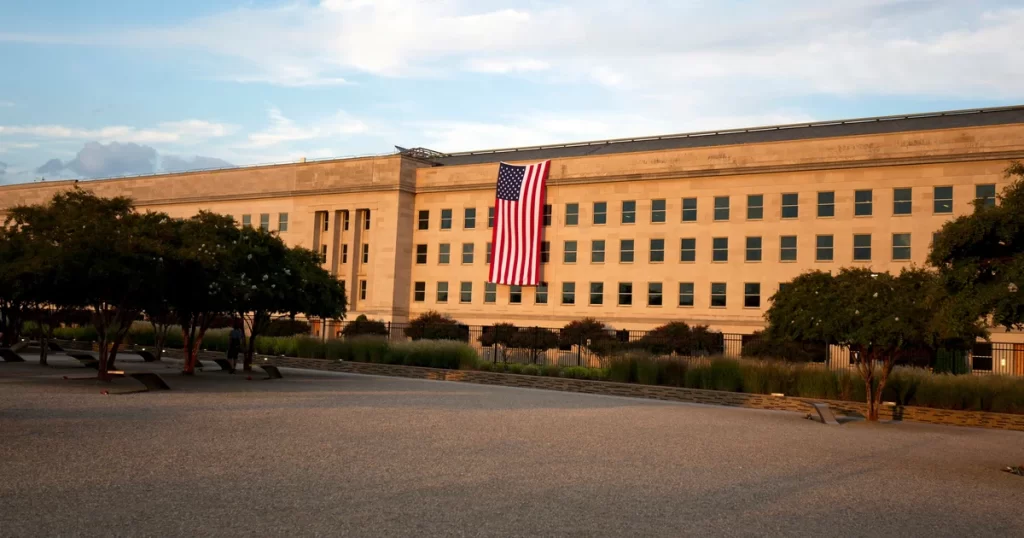




The US Department of Defense has taken the unusual step of designating Anthropic, one of the world’s leading AI developers, as a supply chain risk. The classification, typically associated with foreign technology threats, now prevents companies or agencies working with the Pentagon from using Anthropic’s models.
The move follows weeks of tension between Anthropic and defence officials over how the company’s AI systems could be deployed in military contexts. For Australian organisations connected to US defence programs, the decision introduces new compliance considerations and could prompt reviews of AI vendor strategies.
Defence Department issues formal designation
The Pentagon formally notified Anthropic leadership of the supply chain risk designation, according to reports from TechCrunch, Politico and the BBC. Anthropic has not publicly commented on the designation. Under the classification, any organisation contracting with the Department of Defense must certify that it does not use Anthropic products.
The designation marks a notable escalation in how the US government governs AI suppliers. Supply chain risk labels have historically targeted foreign technology providers viewed as potential national security threats. Applying the same framework to a US based frontier AI lab signals a shift in how defence agencies may manage relationships with domestic AI companies.
The decision quickly triggered backlash from industry figures and former government advisers who described the move as unprecedented. Hundreds of employees across other AI firms publicly objected and called for congressional intervention, indicating the designation could face sustained political scrutiny.
Claude’s military integration disrupted
Anthropic’s Claude model had already been used in US military environments, including integration into Palantir’s Maven Smart System, according to multiple reports. The US military had also relied on Claude during its Iran campaign, making the disruption operationally significant.
The Maven Smart System is a defence intelligence platform that applies artificial intelligence to process and analyse large volumes of operational data. Claude’s integration meant the model was already supporting classified ready analytical workloads before the designation was introduced.
With the supply chain risk label now applied, defence agencies and contractors must transition away from Claude or risk losing Pentagon contract eligibility. The timeline and scope of any migration remain uncertain, although the certification requirement applies immediately for new contracts.
OpenAI takes different path
While Anthropic faces exclusion, OpenAI has negotiated a separate arrangement with the Department of Defense. The agreement permits military use of OpenAI systems for “all lawful purposes,” according to reporting from multiple outlets.
The wording has generated concern within parts of the AI sector. Critics note that the phrase “lawful purposes” leaves room for a broad range of potential military uses without clearly defined operational boundaries. Reports indicate some OpenAI employees have expressed internal reservations about the scope of the agreement.
The different outcomes for two major US AI developers highlight diverging approaches to defence partnerships. Anthropic has emphasised a safety focused mission and maintained restrictions on certain deployments. OpenAI’s broader arrangement reflects a different balance between policy limits and commercial opportunity.
Australian defence partners on notice
Australian organisations connected to the US defence supply chain may face new compliance expectations following the designation. Companies involved in Pentagon linked programs could be required to certify the AI models used within their technology stacks.
Australia’s defence sector maintains close integration with US procurement through long standing alliance structures and initiatives such as AUKUS. Any enterprise embedding third party AI systems into platforms tied to joint operations or US connected projects may need to verify which foundation models are present.
The Australian Signals Directorate and Department of Defence have not indicated whether the US designation will influence domestic procurement policies. Even so, organisations operating in defence or classified environments may increasingly document AI supply chains and consider vendor diversification.
AI vendor risk takes centre stage
The Pentagon’s decision to label a major domestic AI company as a supply chain risk highlights a shift in how governments approach AI procurement. The action demonstrates that national security priorities can rapidly override commercial technology relationships, forcing organisations to reassess vendor dependencies.
Several developments will indicate whether the designation reshapes the broader AI vendor landscape. Congressional hearings could clarify whether new legislative guardrails emerge. The speed with which defence contractors migrate away from Claude will show how seriously the certification requirement is treated. Any policy changes from Anthropic or restoration of Pentagon access would also signal how the dispute may evolve.
For Australian organisations, the episode underscores the growing importance of understanding AI supply chain exposure. As AI systems become embedded in critical infrastructure and defence platforms, vendor risk management may become as routine as cybersecurity and compliance audits.
For Australian businesses reviewing their AI vendor strategies, understanding supply chain implications is essential. Book a free AI Discovery Session with Aivy to discuss how these changes may affect your organisation.