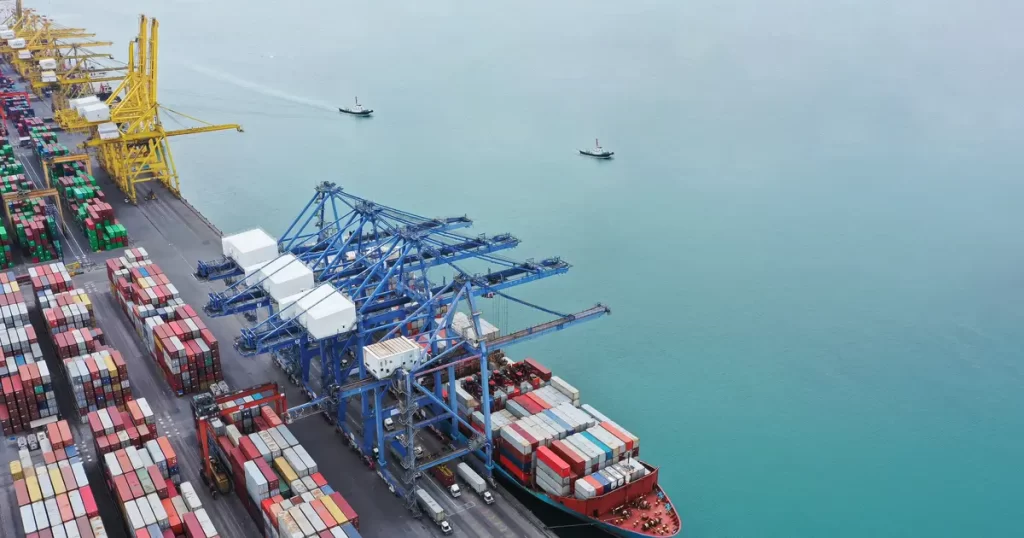




Dalrymple Bay Terminal sits at the heart of Queensland’s coal export corridor, with ship loaders operating nearly four kilometres offshore to fill bulk carriers bound for international markets. Keeping that equipment running safely and efficiently requires drive systems built to handle extreme power demands and harsh marine conditions.
The terminal’s SL1A Ship Loader needed an upgrade from legacy controls to a modern system capable of managing high regenerative loads while meeting current safety standards. Nidec took on the job, delivering a custom Variable Frequency Drive Motor Control Centre engineered specifically for offshore operation.
Custom drive system for offshore loading
Nidec designed and built the Motor Control Centre over an 18-week period. The assembled unit was rated IP44 for environmental protection and built to Form 4a construction standards, meaning each functional section is segregated to limit fault propagation.
The MCC comprises six shipping sections, including two Active Front End units and multiple VFDs for winches, long-travel drives and cable reel systems. Total dimensions came to 8.6 metres wide, 800 millimetres deep and 2.4 metres tall, with a weight of approximately 8.2 tonnes including external dynamic braking resistors.
Managing 1 MW of regenerative energy
Ship loaders generate significant power when lowering heavy loads or decelerating long-travel motions. The Dalrymple Bay system handles up to one megawatt of regenerative energy, feeding it back through the Active Front Ends when connected to the main grid.
When the loader runs on its backup diesel generator, the system automatically reconfigures the AFE power circuits into an Active DC-Bus. This allows dynamic braking resistors to absorb regenerative energy that the generator cannot accept. The automatic switchover removes the need for manual intervention during grid-to-generator transitions.
SIL 3 safety and Ethernet communications
Control Techniques M702 VFDs form the core of the drive system. Each unit includes dual Safe Torque Off functionality to meet Safety Integrity Level 3 requirements, a standard that applies to machinery where failure could cause serious injury.
All devices communicate over Ethernet/IP, providing a common protocol for integration with the terminal’s broader control systems. Maintenance features include withdrawable VFD power units, door-mounted controls and remote keypads for diagnostics without entering the MCC enclosure.

Port automation in Queensland
Dalrymple Bay Terminal is one of several major coal export facilities along the Queensland coast. These ports handle millions of tonnes annually and rely on high-availability equipment to maintain throughput. Offshore ship loaders present particular challenges due to their distance from shore-based infrastructure and exposure to salt spray and humidity.
The modular MCC design features withdrawable units and standard communications protocols, addressing maintenance access challenges in remote offshore locations. SIL 3-compliant drives provide documented safety architecture aligned with current Australian standards for industrial machinery.
Queensland’s bulk export sector continues to invest in automation and control upgrades. Projects like this one demonstrate that high-power offshore assets can be brought to modern safety and efficiency standards without full replacement.
Offshore loader modernisation ahead
The Dalrymple Bay upgrade demonstrates that decades-old industrial equipment can be brought into the modern automation era without full replacement. Nidec’s 18-week turnaround—from design to a fully integrated 1 MW drive system—shows how modular approaches are compressing timelines for complex infrastructure projects.
Automatic switching between grid and generator power means the loader stays operational during planned and unplanned power transitions. Withdrawable drive modules reduce maintenance downtime from days to hours—critical for equipment that operates around the clock.
Australian bulk export infrastructure continues to age, and terminals along the east coast face ongoing pressure to maintain throughput while meeting modern safety standards. Modular drive systems with documented safety architectures offer a practical path forward for these facilities.